
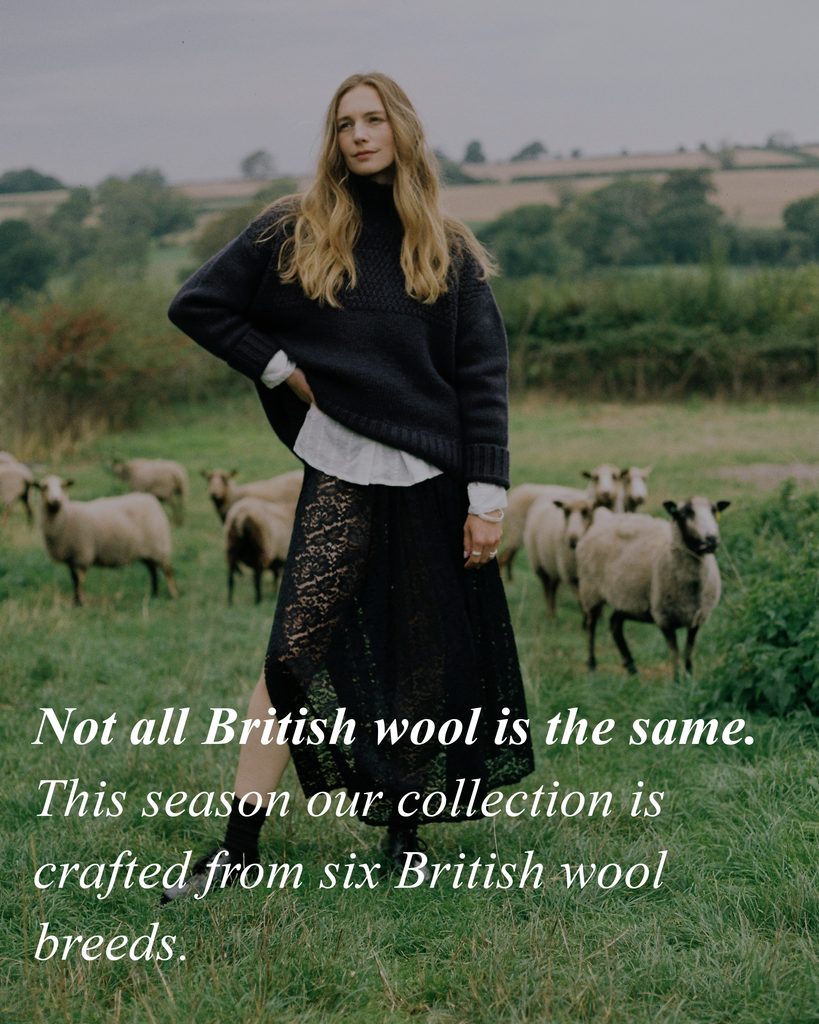
Exploring the six British wool breeds behind our Autumn/Winter ’26 collection, and why each has something quite different to offer.
When I first started Charl, one of my biggest challenges was finding a British wool that had the softness, character and quality I wanted for a modern luxury knitwear collection.
Six years on, I’ve discovered that British wool is far more varied than most people realise.
We tend to talk about British wool as though it’s one generic fibre, when in fact the British Isles are home to an extraordinary variety of sheep breeds, each producing wool with its own distinctive qualities. Some are soft and fine, others wonderfully lustrous and sleek. Some have a springy, woolly character, while others are light, lofty and beautifully suited to colour.
This season, I wanted to explore that variety properly. So I set myself a challenge: could I create an entire knitwear collection using only British wools, without relying on a single imported fibre?
The answer was a resounding yes.
Our Autumn/Winter collection, The Turning Season, brings together six British wool breeds, carefully chosen for their individual characteristics. From soft, fully traceable Shetland wool grown in West Dorset to rare native breeds with exceptionally long, lustrous fleeces, each has been selected for a particular purpose.
Here’s why I chose them.
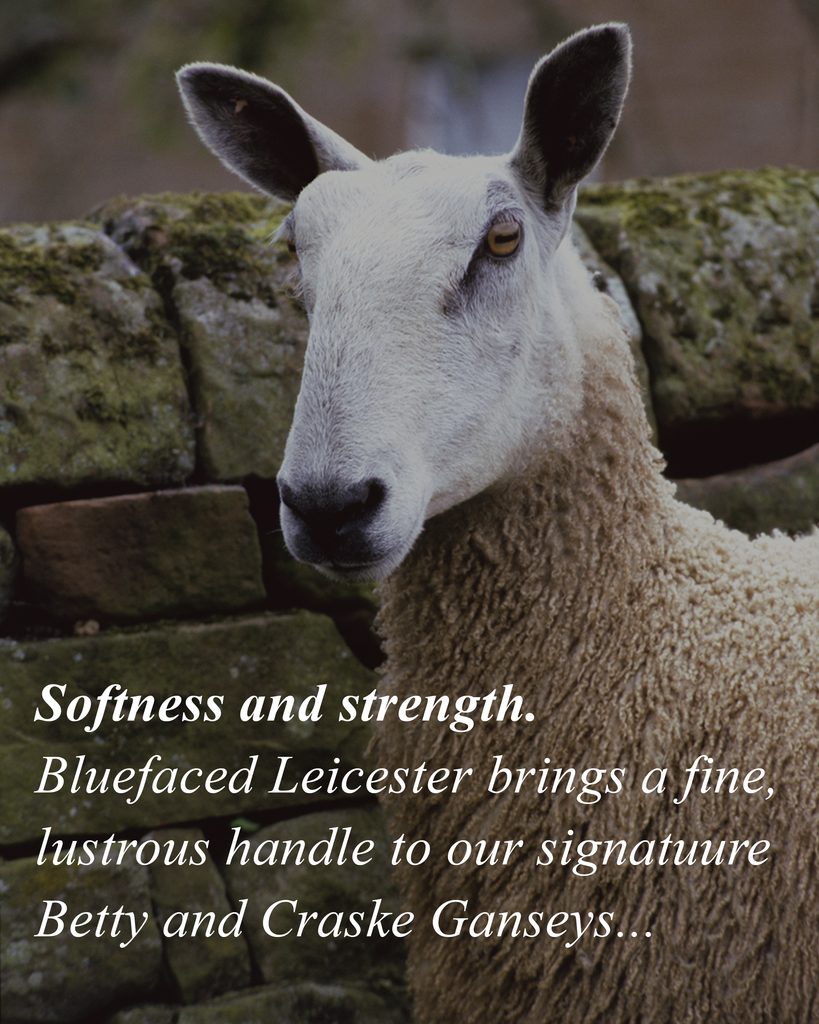
Bluefaced Leicester & Masham: The Perfect Balance
These are the two British wools that started it all for Charl.
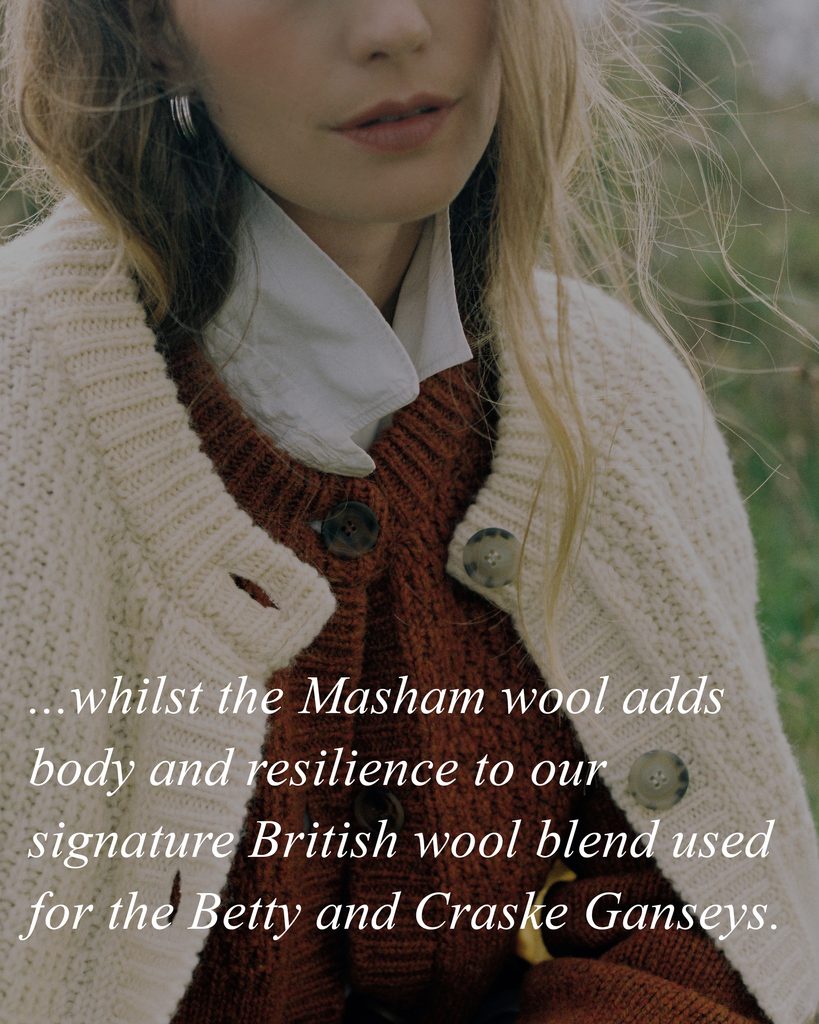
Our bestselling Craske, Harrison and Betty Ganseys have always been knitted in a blend of Bluefaced Leicester and Masham wool, and I’ve never felt the need to change it.
Bluefaced Leicester is prized for its softness and beautiful natural lustre, while Masham contributes body, bounce and resilience. Together, they produce a wonderfully balanced yarn with just the right amount of structure to give our traditional Norfolk Gansey stitches their distinctive definition.
It’s warm, comforting and substantial without feeling heavy, and it wears beautifully.
Sometimes, when you find the right combination, there’s simply no reason to improve upon it.
Upingdown Shetland: Exceptionally Soft and Fully Traceable
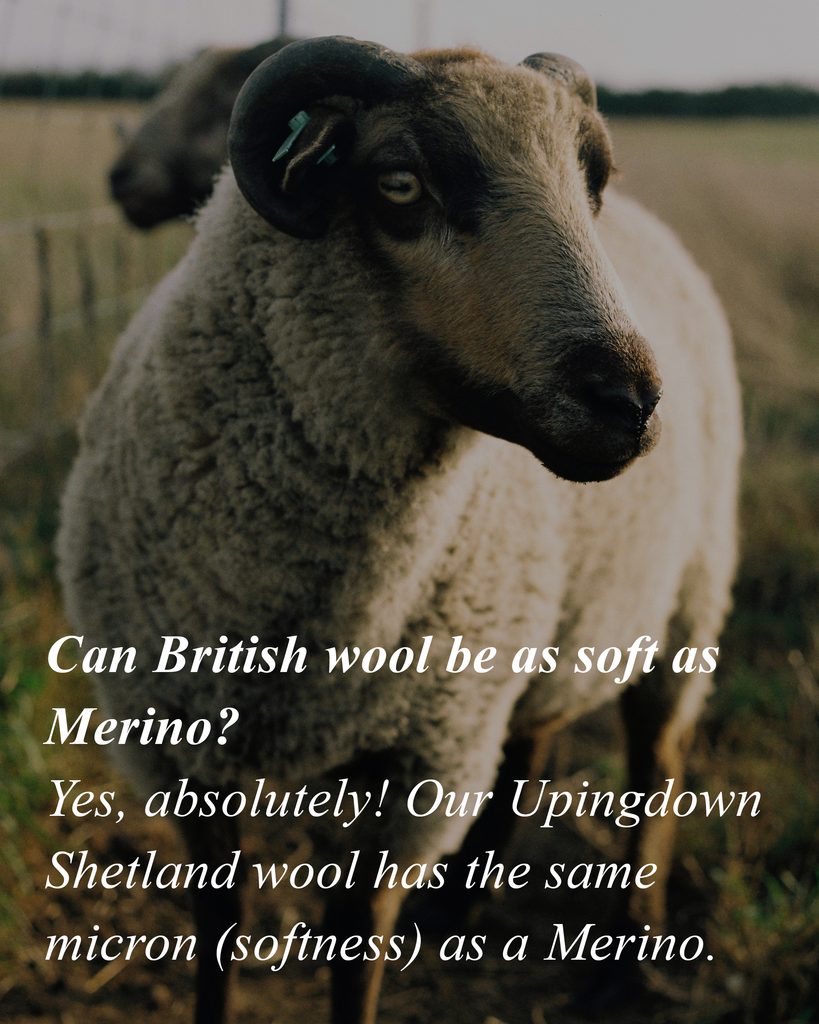
One of the most exciting discoveries for me this season has been a rather special pedigree Shetland flock living in the Frome Valley in West Dorset.
The Upingdown flock comprises around 160 sheep, carefully bred with particular attention to the quality of their fleeces and their wellbeing.
Their wool is exceptionally fine for British Shetland, with a softness that genuinely surprised me when I first felt it. Independent fibre testing has recorded an average diameter as fine as 22.5 microns, placing it within a range comparable to some Merino wools.
But what makes this wool even more remarkable is its traceability. We can trace the yarn right back to the individual sheep whose fleeces contributed to it.
I’ve used this beautiful, naturally pale grey wool to create two new pieces: our Kitty funnel neck Gansey and Penny jacquard cardigan.
Both are light, soft and wonderfully comfortable against the skin, with a completely different feel from our more traditional chunky British wool Ganseys.
For me, this wool demonstrates just how far we can challenge the assumption that British wool is inevitably coarse or scratchy.
Authentic Shetland Wool: A Wonderful World of Colour
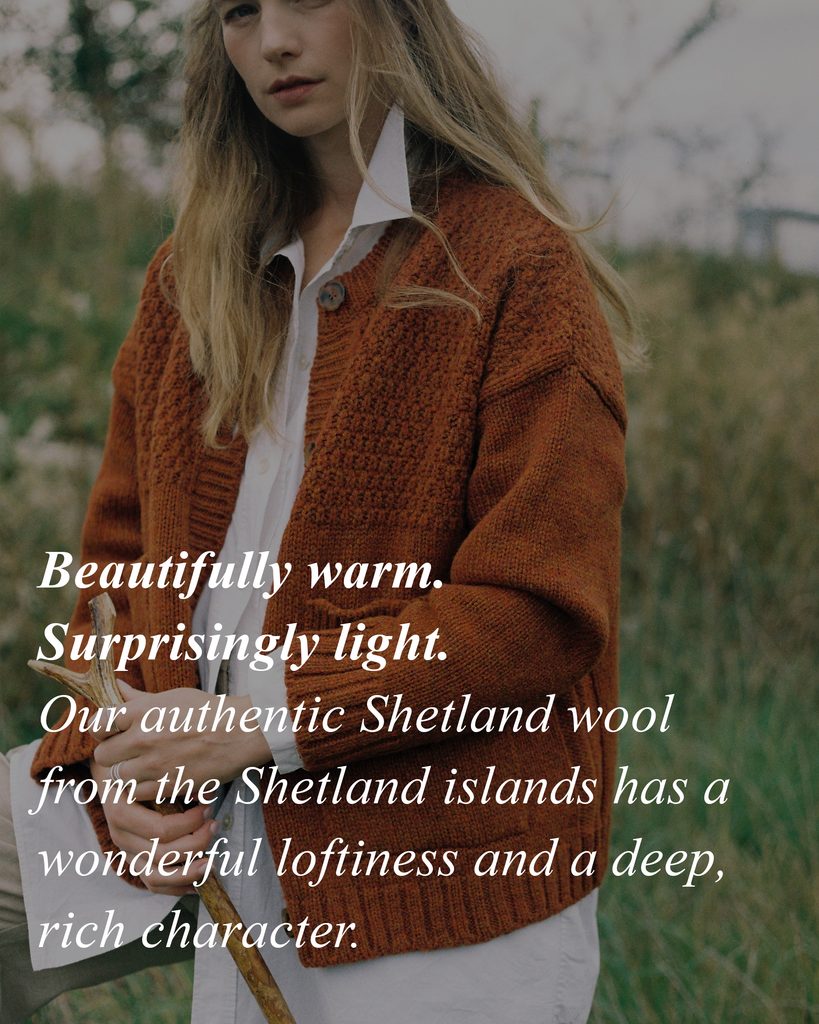
If there’s one wool I return to again and again for its extraordinary colour, it’s authentic Shetland wool, sourced directly from the Shetland Islands through Jamieson & Smith.
Shetland wool has a character quite unlike any other. It’s naturally lofty, springy and light, with a slightly dry handle that makes it surprisingly versatile across the seasons.
But it’s the colours that really capture my imagination.
The beautifully nuanced, heathered shades are created by blending different coloured fibres, including the natural tones of Shetland fleeces. The rich colour tradition is also connected to the historic development of Fair Isle knitting and its remarkable palette of shades.
From deep Ocean Blue and rich Sugar Plum to vibrant Blood Orange, these colours have a depth and complexity that you simply don’t achieve with a flat, solid dye.
I’ve used authentic Shetland wool throughout the collection, including our much-loved Betty cardigan and Craske Gansey, to bring warmth, colour and a little unexpected joy to everyday knitwear.
Wensleydale & Teeswater: The Sleek Side of British Wool
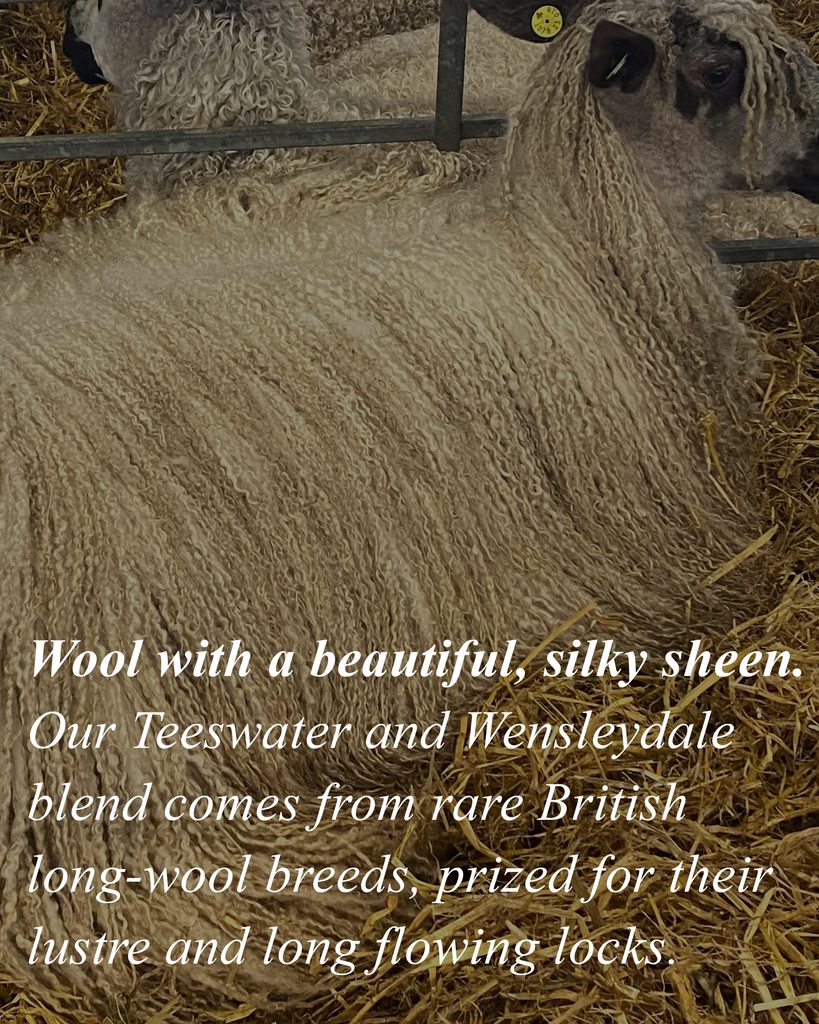
Perhaps the biggest surprise of all is the wool we’ve developed from two of Britain’s rare native sheep breeds: Wensleydale and Teeswater.
I wanted to create something quite different from the traditional woolly yarns we associate with British knitwear. Something smooth, sleek and lustrous, with the fine stitch definition and luxurious handle that we often look to Merino wool to provide.
Both Wensleydale and Teeswater sheep produce extraordinarily long, silky fleeces with a beautiful natural sheen.
Because these breeds are relatively rare, we combined their fleeces to produce enough wool for a bespoke yarn, which was then worsted spun to create a smooth, refined finish.
The result is quite unlike what most people expect from British wool.
It’s beautifully sleek, with a soft, flowing handle and exceptional stitch definition, making it particularly suited to intricate knitting techniques.
We’ve used it for our Dowsey heritage cable-knit jumper, inspired by traditional Norfolk fishermen’s Ganseys, and our Hardingham jacquard scarf.
Both pieces show how traditional British wool can be transformed into something that feels thoroughly contemporary and luxurious.
Six British Wools. Six Different Characters.
What I’ve come to appreciate most through developing this collection is that there really is no such thing as one type of British wool.
Each breed has its own qualities, shaped by generations of breeding, the landscapes in which the sheep live and the skills of the farmers, spinners and knitters who work with their fleeces.
Choosing the right wool for each design is as important to me as the design itself.
A chunky Gansey needs structure and bounce. A soft, mid-weight cardigan needs lightness and comfort. An intricate cable knit benefits from a smooth yarn that allows every stitch to stand out.
And the wonderful thing is that we can find all these qualities within British wool.
I hope this collection encourages you to look at British wool a little differently, too. Not as one generic fibre, but as a wonderfully diverse family of natural materials, each with its own heritage, character and possibilities.
Six uniquely British wools, each with its own story to tell.
Frankie x
Leave a Reply